
Achieving More with Less: A 2026 Update on AI-Assisted Patent Strategy
Written by Ben Esplin
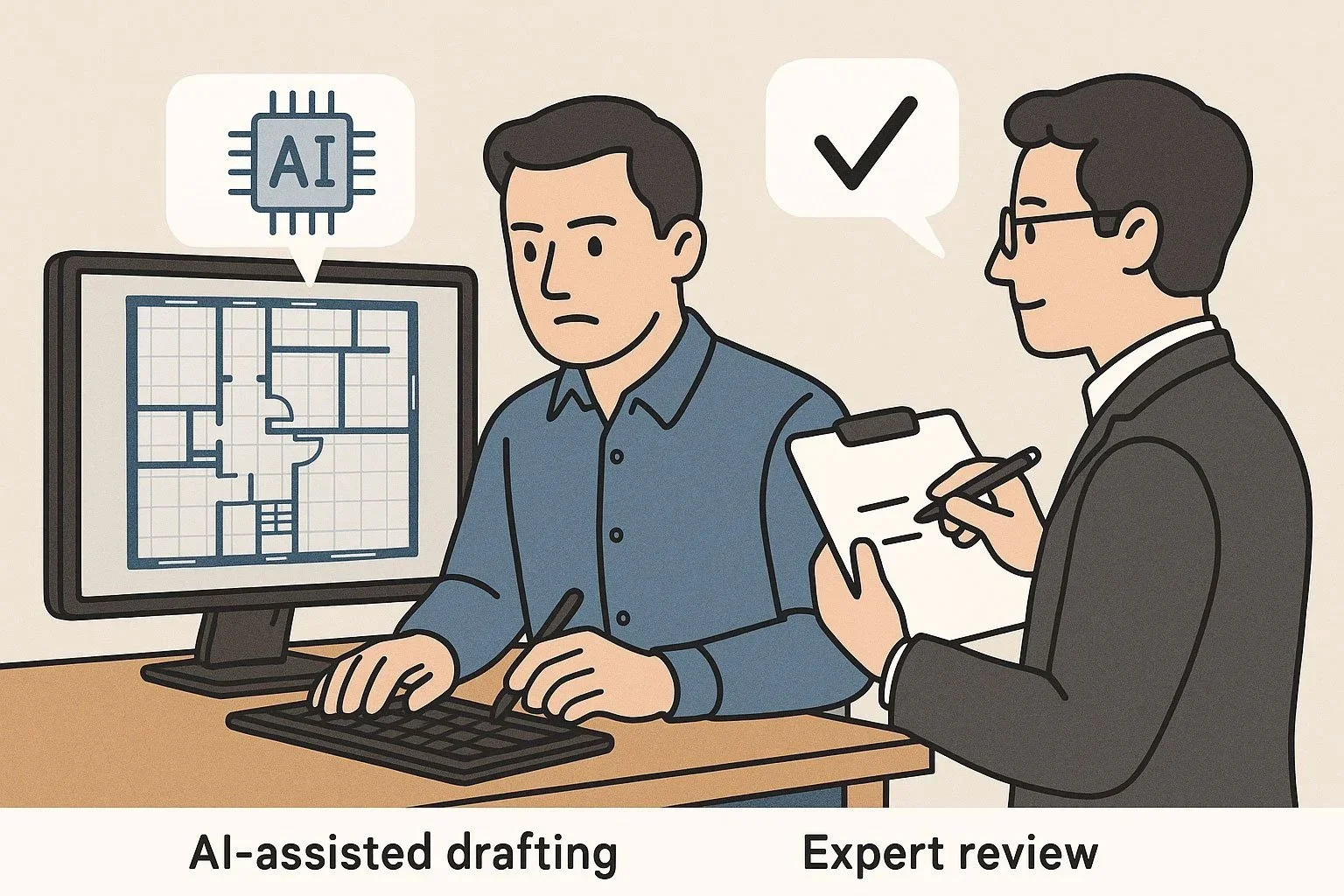
A few months ago, we announced a new service in which we work with founders or inventors who use generative AI to draft provisional patent applications for $1500 per application. In the general flow of the service, we consult with our client ahead of time to provide strategy and some key inputs for generating a provisional patent application, our client operates a generative AI tool (like Idea Clerk) to produce the application, and then an attorney performs an enhanced review of the application and it is professionally filed by a paralegal.
The most immediate observation is the staggering leap in the quality of provisional patent application content being generated by inventors with the help of AI. In the past, we consistently avoided projects that relied on clients to produce final work product in preparing patent applications; today, our clients are using generative AI to produce descriptions that are far more comprehensive and technically rigorous than what was possible just eighteen months ago. This is not just about volume; it is about the precision of the technical narrative, allowing us to start the legal drafting process closer to the fifty-yard line rather than in the shadow of the inventor’s goalpost.
It is important to emphasize that this service is not a "magic button" for patent filings; it requires a significant investment of time and intellectual sweat equity from the client. This effort is the primary engine of the cost savings we provide. By putting in the work to iteratively draft their initial concepts through an AI-assisted framework, inventors are performing a good portion of the high-volume descriptive work themselves. We believe that this labor should be reflected in the final bill, treating the client's time as a valuable asset that directly offsets traditional legal fees.
This value proposition is codified in our 2026 Fee Schedule through the specific interplay between provisional and utility filings. The combined cost of an inventor-led, AI-generated provisional application plus the firm’s fee for preparing a utility application based on that work is less than the cost of having the firm prepare a utility application from scratch. This structure provides a tangible financial credit for the client’s effort, ensuring that every hour they spend refining their technical disclosure results in a direct reduction of their total IP spend. It is a rare instance in the legal industry where a client’s hard work is rewarded with a lower invoice.
Ultimately, these efficiencies allow for a more "aggressive" patent strategy while maintaining or even shrinking a fixed IP budget. For early-stage ventures, this means the ability to secure a stake in the ground for a project that might have previously waited until later rounds of funding. For more mature, IP-rich projects, it enables a high-volume provisional strategy—filing many targeted applications to cover a broad technical landscape—rather than being forced to consolidate into just one or two utility filings due to cost constraints. We are seeing founders move from a defensive posture to an offensive one, building wider moats without increasing their burn rate.
In the spirit of Intellectual Property Conservation, this service remains our most effective tool for achieving more with less. By utilizing AI as the scaffolding for technical description, we ensure that the firm’s high-level strategic focus is applied exactly where it adds the most value: in the claims and the legal architecture. We are proving that when founders are willing to invest their own time and leverage the right tools, they can secure a portfolio that is as legally undeniable as it is technically superior, all while adhering to the reality of their fiscal constraints.