

NEWS & UPDATES
Strategic commentary on patent prosecution, trade secrets, and navigating the evolving landscape of AI-assisted innovation.


The Data Moat: What One Legal Tech AI Partnership Teaches Us About IP Strategy
Algorithms are rapidly becoming a commodity. To build a defensible AI business, you need a "Data Moat." Using the recent Paximal and Juristat partnership as a case study, this post explores how connecting agentic AI workflows to proprietary data layers shifts the paradigm from simple imitation to evidence-based strategy.

A Strategic Architecture for Elevating Quality in Legal Work Through the Use of AI
Most discussions about AI in the law focus on efficiency, but for the serious practitioner, speed is a secondary benefit. This week, I explore the first principle of AI adoption: using technology to do better work than would be accomplished without it. By positioning themselves between a tireless “junior associate” for preparatory analysis and a skeptical “senior reviewer” to simulate the perspective of a patent examiner or PTAB judge, the AI-assisted lawyer achieves a level of technical precision that was previously humanly impossible. Learn why the human attorney remains the essential architect of consistency and coherency, keeping themselves in the decision-making seat to ensure that the final work product is as elegant as it is legally undeniable.
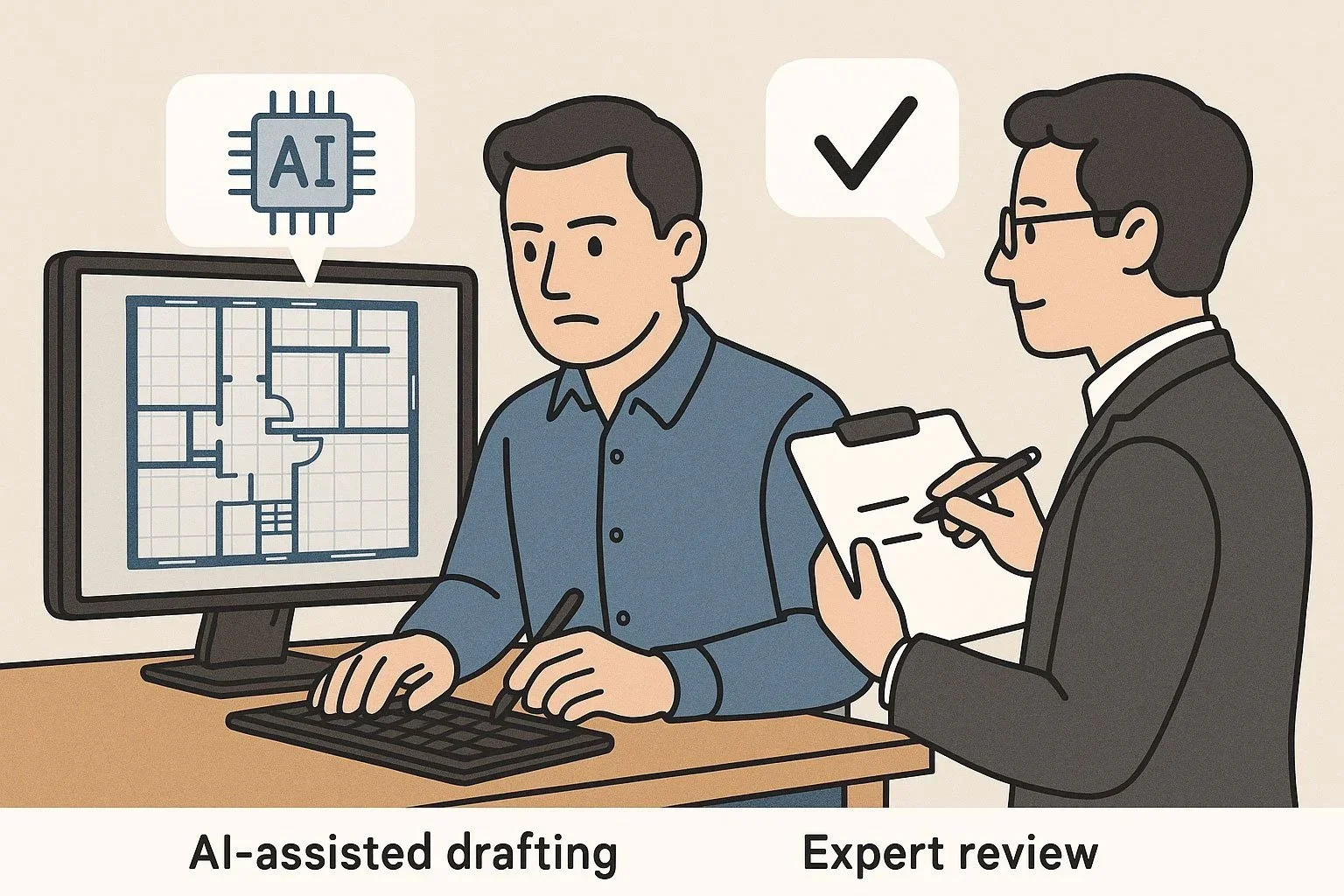
Achieving More with Less: A 2026 Update on AI-Assisted Patent Strategy
A few months after launching our AI-assisted application service, the results are in: inventors are producing higher-quality provisional patent application content than ever before. By rewarding client "sweat equity" with a unique fee structure, we are enabling more aggressive filing strategies that fit within existing budgets. This week, I discuss how this "Inventor-in-the-loop" approach is redefining a core value proposition of modern patent prosecution.

A New Partnership Focused on Trade Secret Litigation Financing
Congratulations to Tangibly and SIM IP on their new partnership! This piece takes a look at what this could mean for companies that generate intellectual property and take protecting it seriously.

The Risk of AI-Assisted Invention And Your Company’s AI Policy
What facts regarding AI usage will determine whether the patents your company gets for AI-assisted invention can be enforced? The truth is: nobody knows yet. And your AI policy should reflect that.

Beyond the Transformer: After the LLM, Then What?
Transformer-based LLMs dominate contemporary AI, yet their architecture embeds profound inefficiency.
Defining the "Something More": How In re Desjardins and the "SMED" Memo Reshape AI Eligibility
For over a decade, the patent eligibility of software and artificial intelligence has been haunted by the vague requirement of Alice Corp.: to demonstrate that a claim contains "something more" than an abstract idea. On December 4, 2025, USPTO Director John A. Squires provided the definitive answer to what that "something more" actually looks like, codifying the recent decision in In re Desjardins as the binding framework for the future of AI prosecution.

Revised Inventorship Guidance for AI-Assisted Inventions: A New Direction from the USPTO
The United States Patent and Trademark Office (USPTO) published its Revised Inventorship Guidance for AI-Assisted Inventions on November 28, 2025, immediately rescinding in its entirety the guidance issued under the previous administration, and creating uncertainty concerning the patentability of at least some AI-assisted inventions.

Modular Prompting: Building Reliable AI Workflows for Legal Practice
The question practitioners face is not whether to adopt AI, but how to adopt it in ways that acknowledge its fundamental limitations while capturing genuine value—and the answer lies in modular prompting, a framework for building reliable, repeatable workflows that constrain AI’s outputs and improve consistency across time.

Esplin & Associates Launches AI-Powered Patent Preparation
Esplin & Associates is proud to introduce its AI-powered patent preparation service, offering a cutting-edge solution that enhances efficiency while maintaining the highest legal standards. This innovative service combines advanced AI tools with the firm's legal expertise, enabling tech companies to streamline their patent drafting process and gain a competitive edge in protecting intellectual property.

The Untapped Power of AI-Generated Patent Applications in Standards Essential Patents
Standards Essential Patents (SEPs) are vital in industries like telecommunications and consumer electronics, where companies race to secure patents essential to industry standards. The traditional patent drafting process can be slow and costly, creating a bottleneck in filing SEPs. However, AI-generated patent applications offer a solution by accelerating the drafting process, reducing costs, and increasing scalability. This technology enables companies to file patents quickly and efficiently, providing a competitive edge in the fast-moving world of standards. AI’s speed and precision make it a game-changer for building SEP portfolios.