
Section 101: More Evidence—and More Flowcharts
Written by Ben Esplin
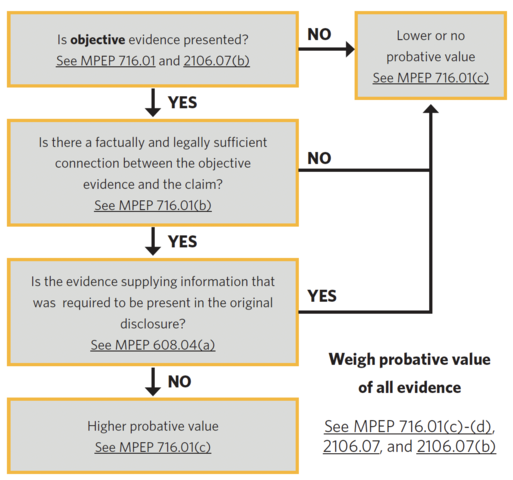
If there is one thing the USPTO’s Alice/Mayo framework needed, surely it was more flowcharts. The September 29 guidance supplies two, along with updated recommendations for Subject Matter Eligibility Declarations (SMEDs).
The USPTO’s September 29, 2026 memorandum delivers just that, along with updated recommendations for Subject Matter Eligibility Declarations (SMEDs). These optional declarations, submitted under Rule 132, provide factual evidence to clarify the record and help overcome Section 101 rejections. The guidance announces no new practice or procedure; it explains how these submissions should be prepared and evaluated.
As discussed in an earlier post, a declaration can move the discussion beyond attorney argument. Rather than merely asserting that an invention improves a technology, the technical basis for that improvement can be explained and supported with evidence tied to the claims.
That evidence remains relevant after Step 2A, Prong 1, including when evaluating integration into a practical application at Prong 2 and “significantly more” at Step 2B.
The memorandum’s practical recommendations are straightforward:
Be specific. Identify the issue being addressed and how the evidence supports the response.
Consider submitting early. Earlier submission can avoid procedural complications and inform the examiner’s initial evaluation.
Provide factual support. Independent technical sources can strengthen an expert’s explanation; a declaration should offer more than conclusions.
Keep eligibility distinct. A separate declaration can help avoid intertwining eligibility with novelty, obviousness, or disclosure issues.
Consider an interview. Discussion can help clarify both the disputed issue and the evidence being offered. (Personally, I have found interviews to discuss § 101 rejections to be counterproductive in most cases).
These are proposed best practices, not additional requirements.
The flowchart separates formal compliance from review on the merits. A properly submitted declaration is not automatically persuasive: its objective support and connection to the claims must be evaluated, all evidence of record weighed, and the determination explained. A useful reminder appears in the footnote: an evenly balanced record should be resolved in the applicant’s favor.
One qualification bears mentioning. As the last post explained, clarity about what the abstract idea “is” at Prong 1 remains its own problem. Without that clarity, declarations directed to the later inquiries are not very meaningful.
The takeaway is modest but useful: a well-supported declaration can make the technical record clearer and the eligibility response stronger. The additional flowchart is optional reading. The evidence deserves closer attention.