

NEWS & UPDATES
Strategic commentary on patent prosecution, trade secrets, and navigating the evolving landscape of AI-assisted innovation.


Patent Eligibility at the USPTO: The Same Test, a Different Framework
Step 1, Step 2A, Prong One, Prong Two, Step 2B: the USPTO’s patent-eligibility framework takes some unpacking. But the more consequential confusion is not the numbering. As I argued in my earlier series, the Office and federal courts can reach similarly labeled conclusions through materially different reasoning. In this post, I revisit where the frameworks line up (and where they do not) and explain why matching labels can conceal different analytical findings. The focus is the USPTO’s approach on its own terms: understanding what its examination framework requires without assuming that it answers the questions a federal court would ask about the same claim.

AI Review
In my earlier post, “What Inventors Give Me Now,” I wrote about how language model technology helps me absorb more of an inventor’s technical understanding. This post explores how the technology has impacted another stage of patent application preparation: inventors are using AI agents to give me more substantive feedback on claim scope, arguments, and strategy. We often discuss their suggestions and discard them. But some contain genuinely useful insights, and even a proposed revision we reject can reveal a concern worth addressing. The opportunity is not to turn inventors into patent attorneys. It is to bring more of what they know into the decisions we make together.
AI Disclosures
The conventional wisdom about AI and patent drafting focuses on speed. My own experience with inventors on complex, technical inventions has been different. The real shift is not in how fast I can write, it is in how much I can absorb. Language model technology has collapsed my ramp-up time on unfamiliar technology and expanded how much technical depth I can synthesize without losing the signal, and that has quietly changed what inventors are willing to hand me in the first place.
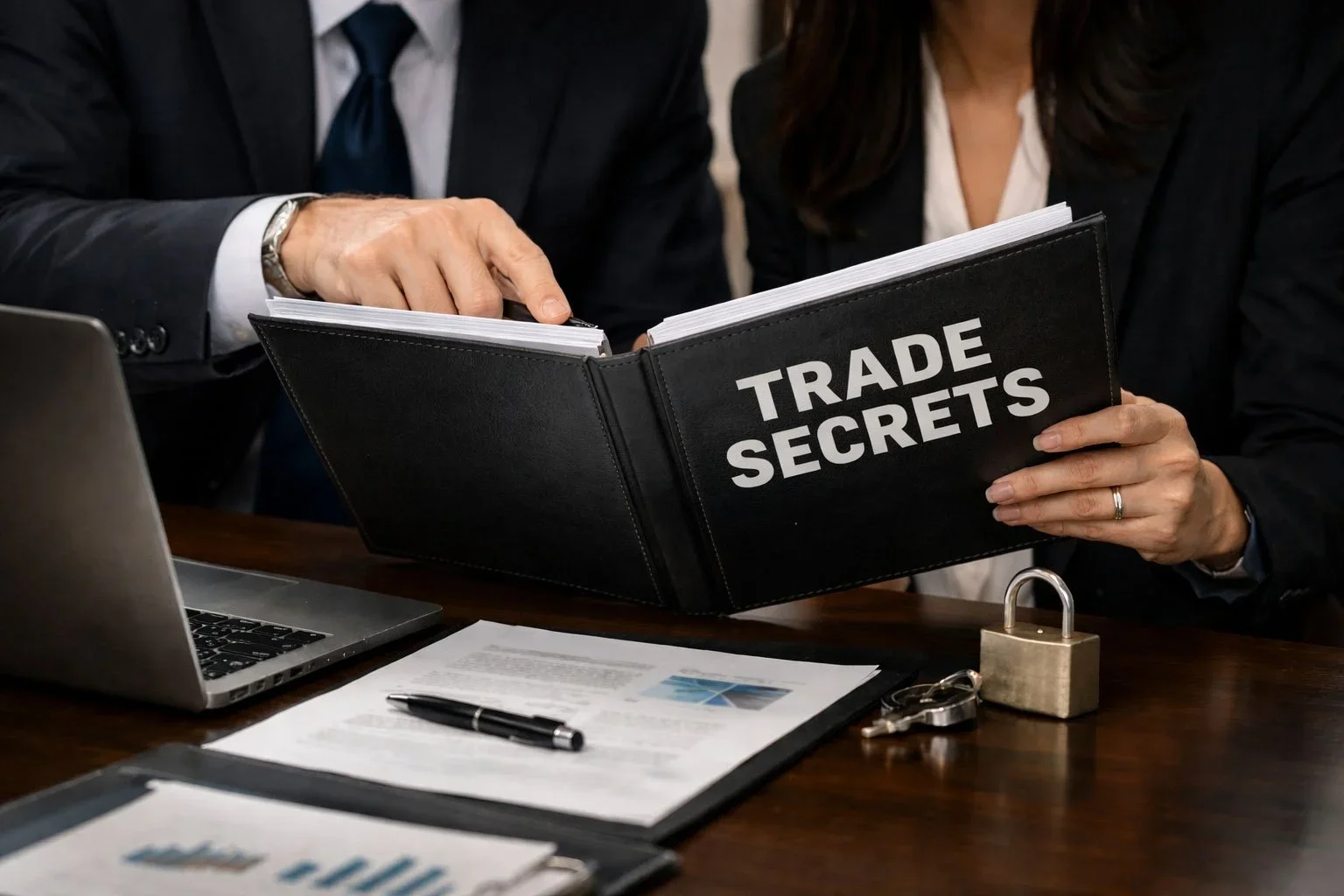
Trade Secrets and the Art of Planned Exposure
When a customer or partner asks for more visibility into how a product actually works, the instinct is often to choose between two bad options: hand over the crown jewels, or say no and risk the relationship. This post argues that trade secret protection, properly structured, does not just guard against exposure, but instead it allows for planned exposure. By pairing trade secret protection with precisely negotiated use restrictions, a company can be exact about what a partner or customer is getting and exact about what they can do with it, turning disclosure from a risk to be tolerated into a tool that closes deals.

Versata v. Ford And The Power Of Trade Secrets – A Series (3 of 3)
In this third and final installment of our series on the Federal Circuit’s blockbuster Versata v. Ford decision, we explore how the court rejected the "atomic" defense to protect complex software architecture as a whole. By strategically separating the information delivered to licensees from the internal definitions of their trade secrets, software innovators can leverage "information asymmetry" to secure their IP and maximize legal liability if a breach occurs.
Versata v. Ford And The Power Of Trade Secrets – A Series (2 of 3)
When protecting proprietary software, relying on a single legal mechanism is a recipe for vulnerability. In this second installment of our series on the Federal Circuit’s blockbuster Versata v. Ford decision, we explore how contract law acts as a powerful, independent backstop to trade secret claims, and how the court reinforced the "Wrongdoer Rule" to reinstate an astronomical $82.26 million verdict.
Versata v. Ford And The Power Of Trade Secrets – A Series (1 of 3)
The Federal Circuit decision late last month in Versata v. Ford is one of the most important decisions for companies that generate and monetize intellectual property in quite some time. In fact, it is so important this is just the first in a series of posts on the case.
An Abdication of Duty: The Supreme Court Denies Certiorari in USAA v. PNC Bank
Earlier this week, the Supreme Court denied certiorari in USAA v. PNC Bank, permanently wiping out a $223 million infringement verdict and leaving the broken state of Section 101 intact. This post explores the impact and origins of the mess.

The Data Moat: What One Legal Tech AI Partnership Teaches Us About IP Strategy
Algorithms are rapidly becoming a commodity. To build a defensible AI business, you need a "Data Moat." Using the recent Paximal and Juristat partnership as a case study, this post explores how connecting agentic AI workflows to proprietary data layers shifts the paradigm from simple imitation to evidence-based strategy.
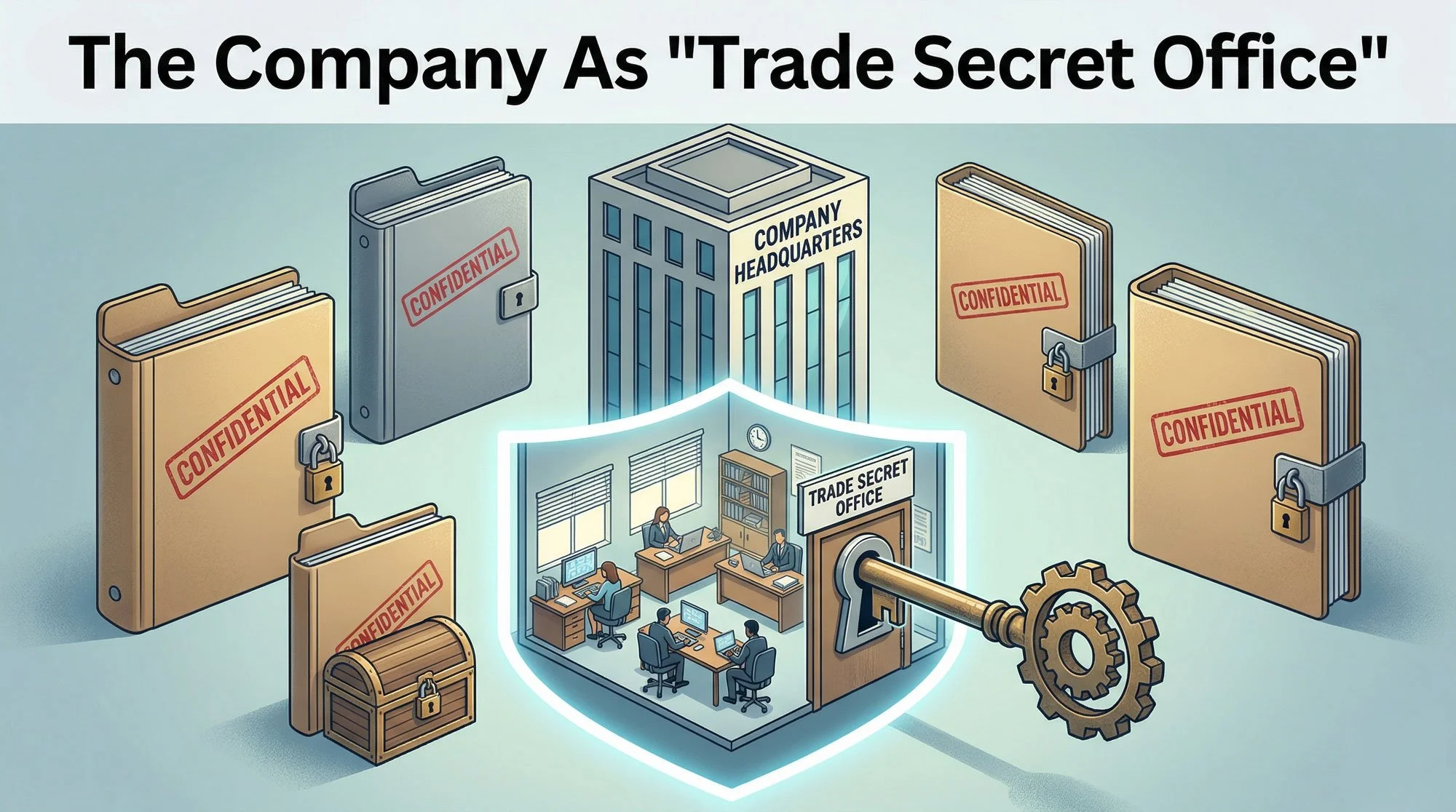
The Company As “Trade Secret Office”
Most innovation strategies rely on the hope of government validation, but trade secrets flip the script. This time, our focus is on the “Internal Examiner” model, where the power to create legal certainty resides entirely within the enterprise. By utilizing internal “reasonable measures” to grant protected status to its own assets, a company eliminates the uncertainty of external backlogs and shifting administrative policies. Learn how to take control of the innovation pipeline and build an operational moat without waiting periods or maintenance fees.
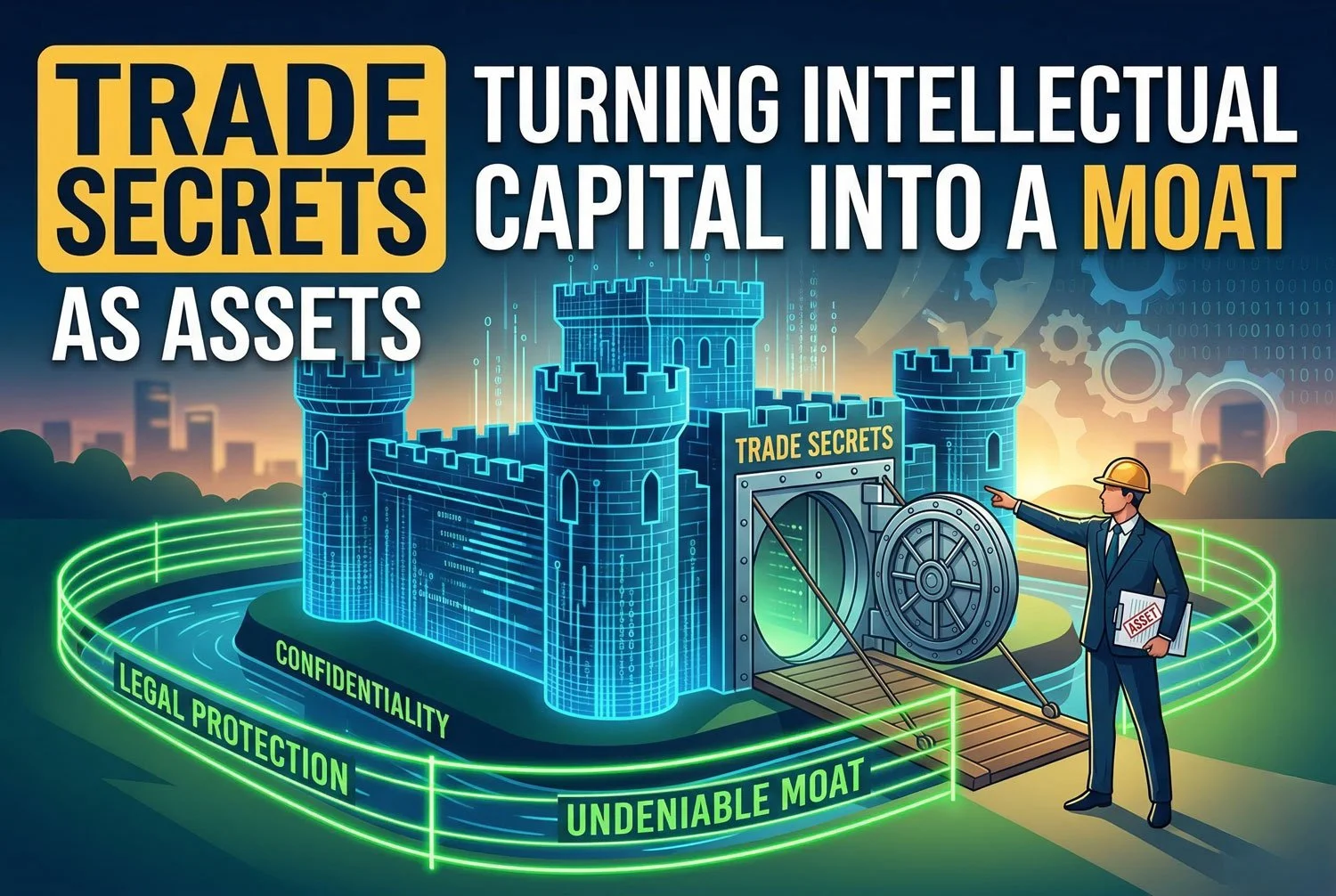
Trade Secrets as Assets: Turning Intellectual Capital into a Legally Undeniable Moat
Most companies treat trade secrets as a passive legal status—something they “have” simply because they haven’t told anyone. In my latest post, I break down why this is a high-risk strategy and propose a more proactive approach. Learn what specific data points should be generated for every trade secret asset to transform vague know-how into a defensible “Innovation Ledger,” and how this documentation provides critical leverage during M&A due diligence, technical collaborations, and internal audits.
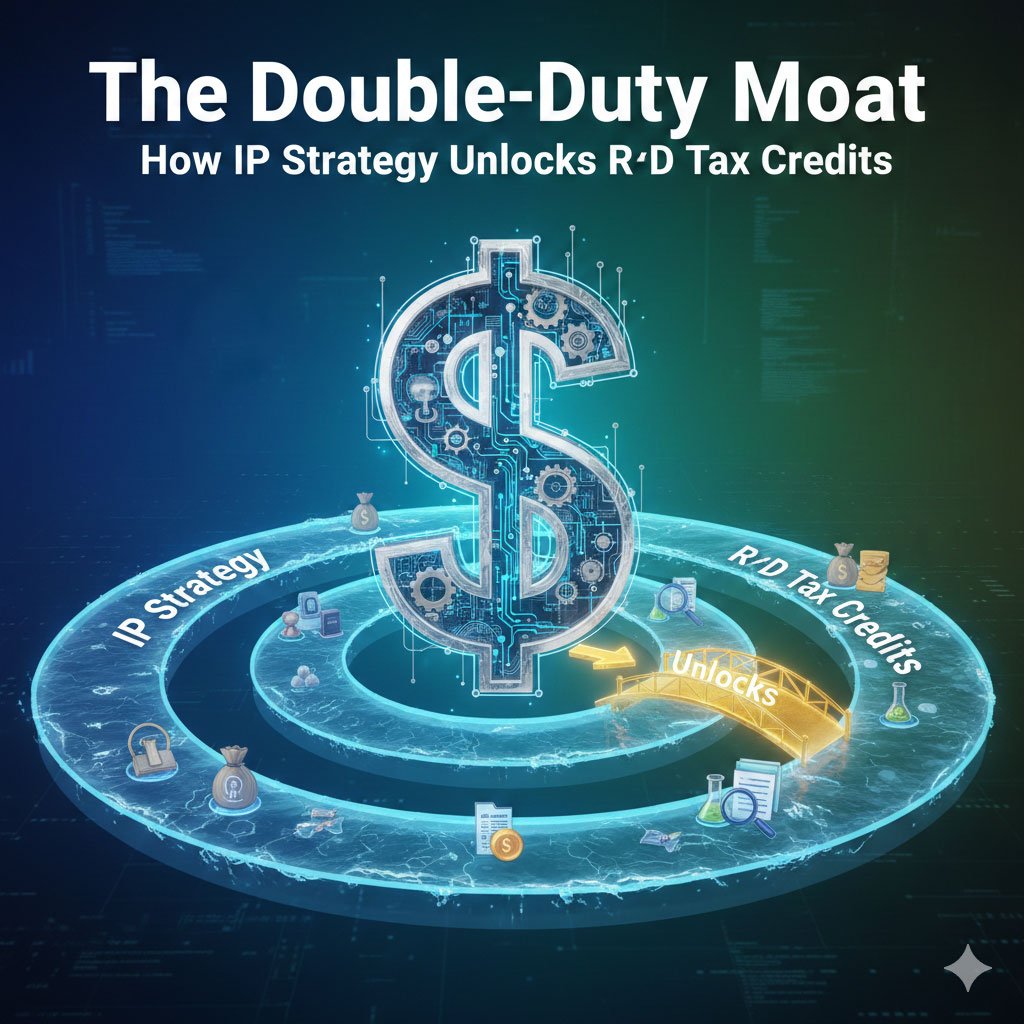
The Double-Duty Moat: How IP Strategy Unlocks R&D Tax Credits
Founders love R&D tax credits, but the IRS documentation requirements can be an administrative nightmare. This week, I explore how working with an IP attorney to secure your patents and trade secrets naturally generates the exact “contemporaneous proof” the IRS demands. Learn how to use a single strategic effort to build a legal moat and unlock non-dilutive capital.
USAA v. PNC Bank and the Definition of the Abstract Idea
The USAA v. PNC Bank petition for certiorari brings the Section 101 “abstract idea” exception back to the Supreme Court, highlighting the logical tension in labeling processes involving tangible objects as abstract. This post explores the fundamental difficulty of distinguishing between abstract concepts and their physical applications when every idea is, by its very nature, abstract.
A New Partnership Focused on Trade Secret Litigation Financing
Congratulations to Tangibly and SIM IP on their new partnership! This piece takes a look at what this could mean for companies that generate intellectual property and take protecting it seriously.

2026 Patent Fee Schedule: New Service for AI-Assisted Applications
We have updated our Patent Fee Schedule for 2026 with a new offering for early-stage companies: professional preparation assistance and filing of a US Provisional Patent Application for inventors who would like to generate their own application draft using a generative-AI tool like Idea Clerk.

AI and Energy Consumption
Construction scaffolding represents an expensive paradox: temporary metal frameworks that consume materials and labor, only to be dismantled once the permanent building stands complete. Today's large language models present a strikingly similar contradiction—computationally profligate systems whose greatest value may lie in designing their own elegant replacements.

A Measured Approach to Generative AI Tools For Intellectual Property Protection and Management
While there is no doubt that generative AI will change the manner in which almost all aspects of the law are practiced, reports of the death of jobs in the patent industry due to AI tools are greatly exaggerated.

Protecting the Data Advantage: Why Trade Secrets Programs Are Essential for Data-Driven Technology Companies
Data-driven technology companies face a critical risk shift as they mature—from proving market value to protecting their innovations from competitors—making trade secrets programs essential for safeguarding the proprietary data sources, AI methodologies, and analytical processes that drive their competitive advantage in the $14.4 billion data monetization market.

Navigating Intellectual Property Protection in the Evolving AI Landscape
The complex and fast-moving nature of AI development creates challenges for IP protection, particularly if legal advisors lack a solid understanding of the underlying technology.

Protecting Innovation With Trade Secrets And Patents, Simultaneously
Innovators don’t have to choose between patents and trade secrets—they can use both strategically to maximize protection. By carefully managing disclosure and timing, businesses can preserve trade secret value while keeping the door open to patent protection.